Targets: Pectoral muscles (chest)
Equipment Needed: Chest press machine
Level: Beginner
The chest press helps build the pectoral muscles while also working the biceps, deltoids, and latissimus dorsi. The seated chest press is an upright version of the lying bench press and a great addition to an upper-body strength workout. Here is what you need to know about using a chest press machine to perform a seated chest press.
How to Do a Seated Chest Press
B2M Productions / Getty Images
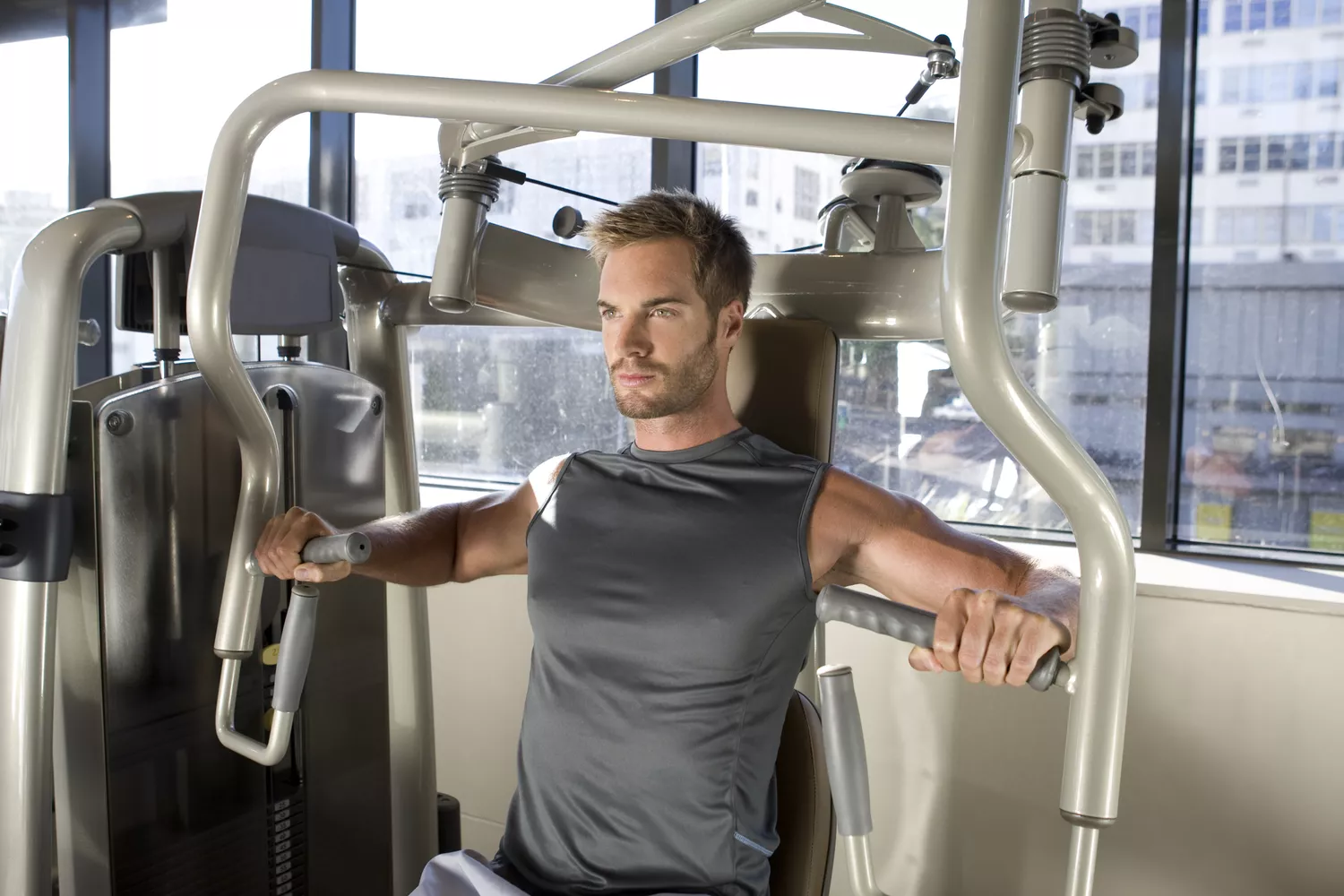
After setting the chest press machine at the desired weight, sit with your feet firmly on the floor, about shoulder-width apart. If the seat is adjustable, ensure that its position allows your arms to be horizontal when fully extended. Here is how to perform the exercise.
- Grasp the handles with a full grip, your thumb circled around the handle.
- Maintain a neutral wrist position with your wrists in line with your forearms.
- Exhale and push outward until your arms are fully extended (don't lock the elbows).
- Keep your head steady against the back support during this movement and your neck still. You should feel resistance against the horizontal push.
- Pause briefly at full extension.
- Bend your elbows and return to the starting position, breathing in during this recovery.
If this is your first time using a chest press machine, place a lighter load on the weight carriage. If you are unfamiliar with a particular machine, don't hesitate to ask a trainer or gym attendant for help.
Benefits of the Seated Chest Press
This exercise targets the pectorals, the main muscles of the chest. These are the same muscles you use when pushing a grocery cart or to get up off the floor.
Developing the pecs is an aesthetic goal for many people. It's also important because strength in these muscles decreases with age, potentially increasing your injury risk while decreasing your mobility and quality of life.
The chest press machine also recruits the biceps and the large muscles in the shoulders and back. That makes this exercise especially beneficial for those participating in sports involving swinging a bat, racket, or club.
Seated Chest Press vs. Bench Press
The seated chest press machine removes the recruitment of stabilizing muscles required to keep your body steady when performing the bench press. This means you are targeting the chest muscles, but not the muscles that work with the chest to perform pressing movements. For functional fitness, this could be less desirable.
However, if you want to add more volume to your chest workout without tiring additional muscles and managing overall fatigue, the seated chest press is a good choice. Additionally, the bench press recruits more muscle fibers in the chest than the machine.
Other Variations of a Seated Chest Press
You are somewhat limited in the different ways you can perform a seated chest press on a machine, but there are a couple of modifications you can make.
No Weights for Beginners
If you are new to this exercise, begin with no weight on the chest press machine until you learn the proper form. Then add small increments of weight until you reach the amount you can press for eight to 12 reps with good form. As you build muscle, you can increase the weights used.
Single-Arm Seated Chest Press
Make the seated chest press more challenging by pressing one arm at a time. Follow the same steps for both arms but just use your right or left arm to push the weight. Remember to do the same on the other side to keep your muscles balanced.
Seated Chest Press With Different Equipment
The same exercise can be performed on a bench using either a barbell or a pair of dumbbells, as well as on a cable machine or suspension trainer. As each will have a slightly different action, changing up your equipment is a good way to vary your chest press routine.
Chest Press Machine: Common Mistakes
Avoid these errors to get the most benefit from this exercise and avoid injury.
Elbows Too Far Back
Don't stress your shoulder joint by extending your elbows too far back when grasping the handles. A little extension is OK, but the handgrips should always be in front of your body line.
Injuries can easily occur if you hyperextend the shoulder while bearing even moderate weight. Oftentimes, the machine is designed so it has a catch that won't allow this overextension. Ensure that it has been set correctly or ask a gym attendant to check this for you.
Explosive Movement
When pushing the bar, your movement should never be explosive. Keep your movements steady and controlled, both as you push and release. If needed, count "one-two" when pushing, pause, and then count "one-two" as you release. Never rush.
Arching Back
Keep your back and shoulder blades against the back support. If you find yourself arching your back when you push, you are pressing too much weight. Reduce the weight so you can push with effort and without arching the back.
Safety and Precautions
Talk to a healthcare provider or physical therapist about whether using the chest press machine is appropriate if you have had an injury to or recent surgery involving your chest muscles or shoulders. If at any time you feel pain in your arms, shoulders, or chest, end the exercise.
Be sure to take the time to adjust the chest press machine to fit your torso and arm length. Ensure you have set the levers to prevent overextending your elbows and shoulders. Check the weights selected so you aren't lifting too much.
To begin, try three sets of 10 reps. Start with less if you have to, always listening to your body to avoid injury. Try different weights until you are able to push and release slowly for about 10 repetitions. The last repetition should always feel a bit challenging. Rest for a few minutes between sets.
Try the Chest Press Machine
Incorporate this move and similar ones into one of these popular workouts:
- Beginner Upper Body Workout
- Fat Burning, Muscle Building Full-Body Workout
- Weight Training Workout to Reduce Back Pain